How to Measure Your Boat's Transom Height
Getting your transom height right isn't just about making the motor fit—it dictates your outboard's required shaft length. A precise measurement ensures your propeller sits at the exact depth needed for optimal water flow, efficient propulsion, and proper engine cooling.
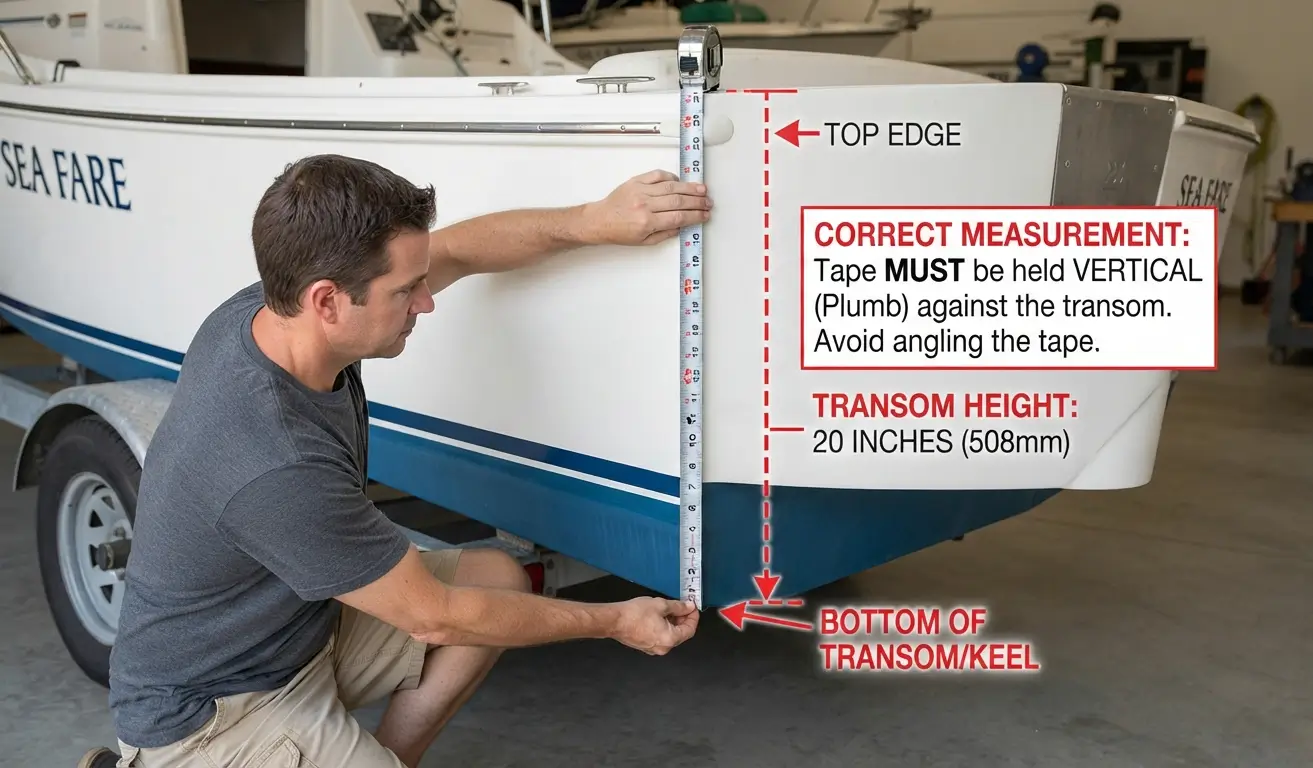
1. What You'll Need
- A standard tape measure
- A straight edge (like a scrap piece of wood or a spirit level) to help if your keel is hard to reach
2. Step-by-Step Measurement Instructions
- Level the Boat: Before taking any measurements, ensure your boat hull is sitting as close to perfectly level as possible on its trailer or stand.
- Find the Top Center: Locate the lowest point at the top center of the transom. This is the exact spot where the outboard motor bracket will rest.
- Find the Bottom Keel: Locate the lowest point of the hull directly below that center point. (If the bottom of the hull is difficult to reach with the tape measure, place your straight edge flat against the very bottom of the hull so it extends out backward past the transom).
- Take the Measurement: Measure the vertical distance straight down from the top center point to the bottom keel (or to your straight edge). Make sure the tape measure is perfectly vertical, not angled flush against the slant of the transom.
3. Standard Shaft Length Translation Chart
Once you have your exact measurement, use this chart to find the corresponding outboard shaft length you need when shopping for a motor.
| Transom (Imperial) | Transom (Metric) | Required Motor Shaft | Designation |
|---|---|---|---|
| 15" to 16" | 38 cm to 41 cm | 15" Shaft | Short Shaft (S) |
| 20" to 21" | 51 cm to 53 cm | 20" Shaft | Long Shaft (L) |
| 25" to 26" | 64 cm to 66 cm | 25" Shaft | Extra Long Shaft (XL) |
| 30" | 76 cm | 30" Shaft | XXL Shaft (XXL) |
4. Interactive Shaft Length Calculator
Enter your transom measurement below and the calculator will instantly recommend the correct outboard shaft length. The diagram updates dynamically to show the motor configuration.
Shaft Length Finder
*Note: The standard transom ranges include slight buffers for varying hull designs. For measurements falling between standard categories, the calculator rounds to the nearest recommended shaft length. Always verify with your motor manufacturer's specifications.
5. Expert Transom and Outboard Tips
How to Measure an Outboard Motor
If you are buying a used motor and the original specifications are missing, you can easily verify its shaft length yourself. Measure from the inside top of the engine's mounting bracket (the part that rests on the very top of your transom) straight down to the anti-ventilation plate (often mistakenly called the cavitation plate), which is the large horizontal fin situated just above the propeller.
Symptoms of the Wrong Shaft Length
Getting the shaft length wrong will severely impact your boat's performance and can even cause permanent damage to your motor.
- If the Shaft is Too Short: The propeller will continuously suck in surface air (ventilation), leading to a loss of thrust and poor handling. More dangerously, if the motor's water intakes sit above the waterline when on plane, your engine will rapidly overheat.
- If the Shaft is Too Long: A motor that sits too deep creates excessive hydrodynamic drag. This results in reduced top speed, poor fuel economy, sluggish handling, and excessive water spraying back over the transom into the boat.
Nuances for Different Hull Types
Not all boats are shaped the same. Keep these variations in mind when measuring:
- V-Hulls vs. Flat Bottoms: Whether your boat has a steep deadrise (V-shape) or is completely flat, the rule remains the same: always measure straight down the center line to the absolute lowest point of the hull.
- Pontoons: Because pontoons lack a traditional center hull, measure from the top center of the motor mounting bracket straight down to the horizontal plane aligning with the very bottom of the pontoon tubes.
- Sailboats: Sailboats generally require longer outboard shafts (often Extra Long or XXL). Because sailboats pitch and roll heavily over swells, a longer shaft is necessary to ensure the propeller doesn't lift completely out of the water.
Adjusting Your Transom Height
What happens if you find a great deal on a long-shaft motor, but you have a short-shaft boat? You can safely bridge the gap by installing aftermarket hardware rather than modifying the boat's hull:
- Jack Plates: These allow for precise vertical adjustment of the motor. A manual or hydraulic jack plate can easily raise a long-shaft motor to the correct operating height on a short transom.
- Transom Elevators and Brackets: These heavy-duty extensions bolt directly onto your existing transom to permanently raise the mounting point, keeping the powerhead dry and the propeller at the correct depth.