How to Measure Deadrise on a Boat: A Step-by-Step Guide
Why does the angle of your hull matter? Whether you are installing a new thru-hull transducer or trying to understand how a boat will handle rough chop, knowing your exact deadrise is a crucial specification.
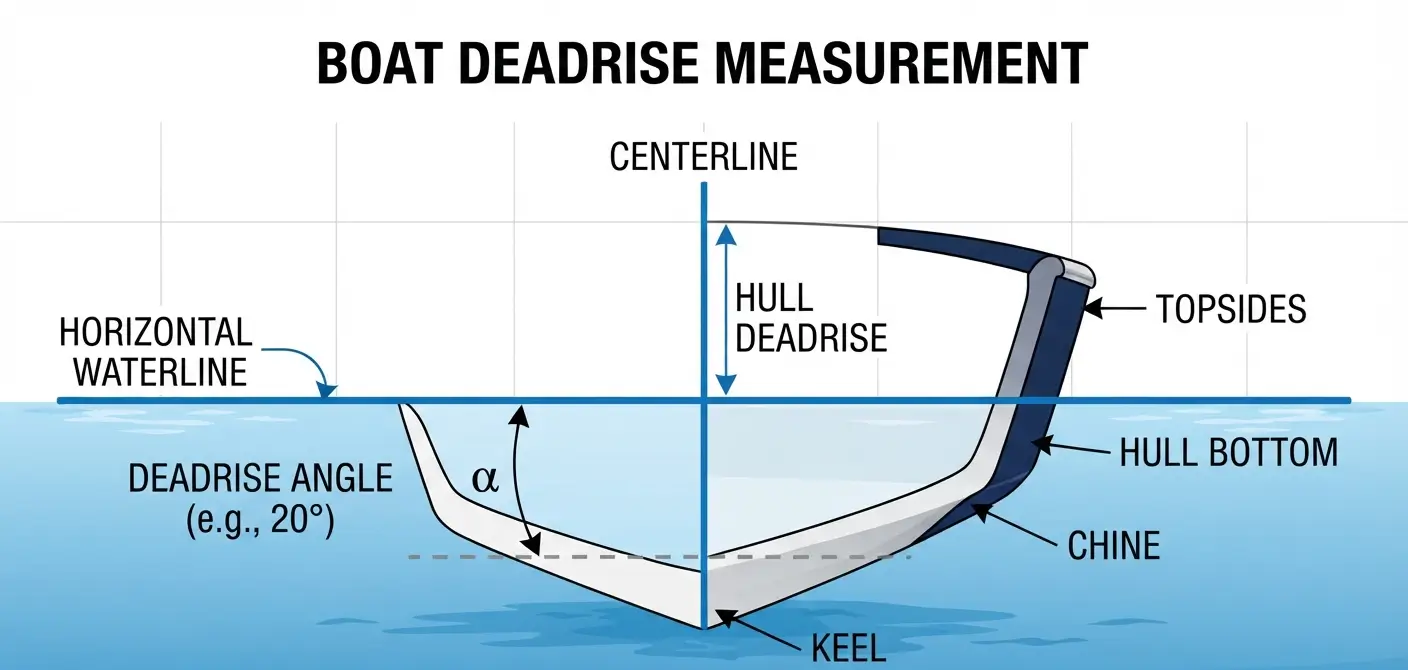
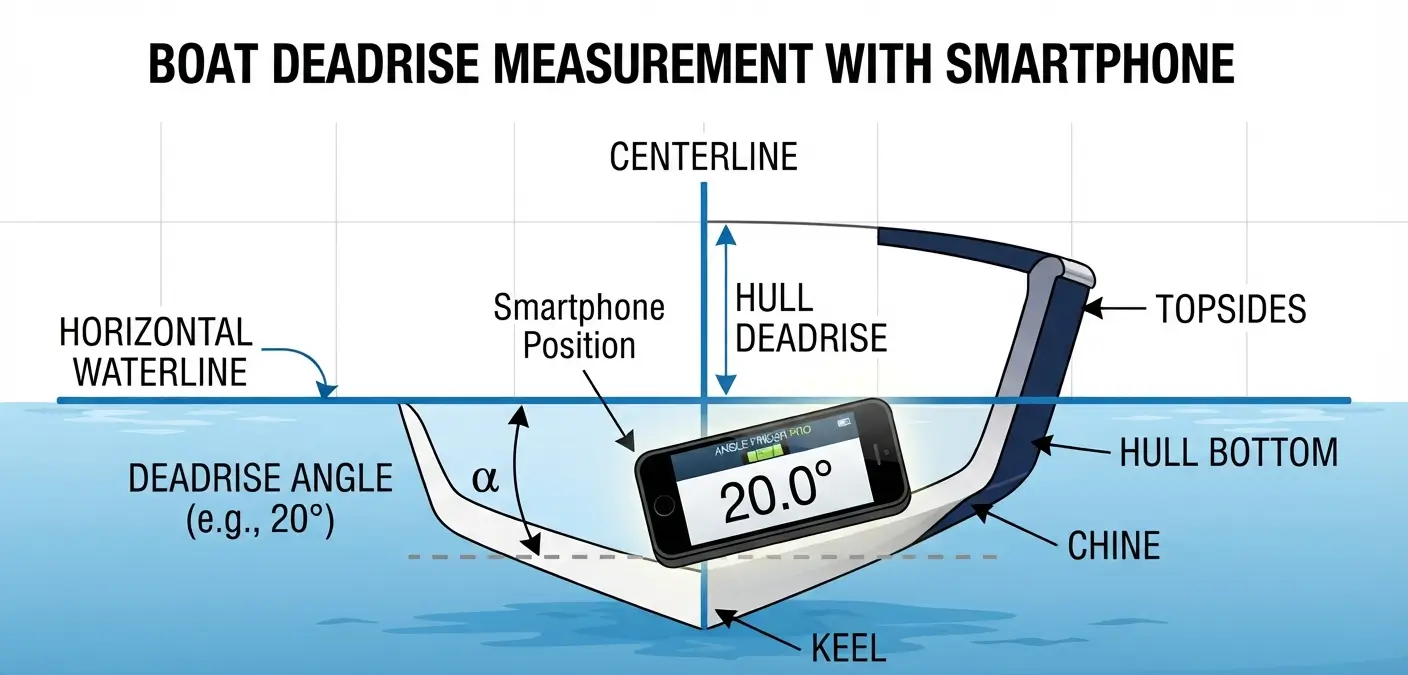
Simply put, deadrise is the angle of your hull rising from the horizontal plane. The quickest way to measure it today is right in your pocket: by holding a smartphone angle-finder app directly against the hull. Here is everything you need to know to get an accurate reading.
What is Boat Deadrise?
Deadrise is the angle formed between the horizontal plane (like the water's surface) and the side of the hull. It represents how "V-shaped" the bottom of your boat is.
It's important to note that this angle isn't constant on most modern vessels. Boats typically feature a "variable deadrise," meaning the angle is sharpest at the bow to slice through waves, and it gradually flattens out as you move backward toward the transom.
Why Knowing Your Deadrise is Important
- Installing Transducers: Thru-hull sonar transducers require precise tilt angles (usually available in 0°, 12°, or 20° models) to ensure they shoot their sonar signal straight down to the sea floor. Guessing this angle will result in a tilted sonar cone, ruining your fishfinder's performance and depth readings.
- Understanding Ride vs. Stability: The deadrise dictates how your boat behaves on the water. A higher angle cuts through rough water for a softer, more comfortable ride. A lower angle offers better fuel efficiency, shallower draft, and significantly more stability when anchored or resting.
Where Should You Measure It?
- At the Transom: When boat manufacturers list a single "deadrise" number in a spec sheet or brochure, they are almost always referring to the measurement at the transom (the very back of the boat).
- At the Transducer Mounting Point: For marine electronics installation, the transom number is practically useless if you are mounting the transducer midship. The measurement must be taken exactly where the transducer will be placed, as the hull's angle changes significantly along the length of the boat.
Tools You Will Need
- Smartphone: With an angle finder, clinometer, or digital level app installed (the easiest and most common modern method).
- Digital Angle Gauge / Smart Level: For highly accurate, professional readings.
- Protractor & Plumb Bob / Straight Edge: The old-school manual method if you don't have digital tools available.
How to Measure Deadrise (Step-by-Step)
- Level the Boat: This is crucial for an accurate baseline. The boat must be sitting perfectly level on its trailer or lift. Use a standard level on a known horizontal surface on the boat, such as the deck or the chine, to verify that it is not leaning to one side.
- Locate the Measurement Point: Decide if you are measuring at the transom (to verify hull specifications) or at a specific midship location (for a thru-hull transducer installation).
- Apply the Angle Finder: Place your smartphone or digital level flat against the hull's bottom on one side of the keel. The device must be positioned perfectly perpendicular (90 degrees) to the centerline of the boat.
- Read and Average the Angle: Record the displayed measurement. To account for any slight, imperceptible tilt in how the boat is sitting on the trailer, measure both the port and starboard sides of the keel at the exact same location. Average the two numbers together to get your true deadrise angle.
Deadrise Angles Explained (What the Numbers Mean)
If you are boat shopping and looking at manufacturer specs, here is a quick guide to what those transom deadrise numbers mean for your ride:
| Angle | Hull Type | Pros & Cons |
|---|---|---|
| 0° - 5° | Flat Bottom (Skiffs, Jon boats) | High stability and shallow draft, but pounds heavily in rough chop. |
| 10° - 15° | Modified-V (Bay boats) | Great balance of stability at rest, decent draft, and a reasonably smooth ride. |
| 20° - 25° | Deep-V (Offshore center consoles) | Slices through heavy seas beautifully, but requires more power, drafts deeper, and rocks more at rest. |
Frequently Asked Questions (FAQ)
Can I just look up my boat's deadrise in the manual?
Yes, you can often find this in the manufacturer's spec sheet, but remember they only publish the transom angle. That won't help if you need the angle for a midship transducer installation.
Does deadrise affect my boat's speed?
Generally, yes. A higher deadrise (Deep-V) creates more wetted surface area and drag, requiring more horsepower to achieve the same speeds as a flatter hull.
Conclusion
Measuring your boat's deadrise takes only a few minutes, but it is an essential piece of information for any boat owner. Whether you are comparing boat models for offshore performance or ensuring your new fishfinder works flawlessly, grab your smartphone, level your hull, and get your exact angle.