How to Measure Boat Length
Knowing your boat's exact length is critical for everything from buying the correct size boat cover to registering your vessel, determining slip fees, and ensuring safe towing. Here is exactly how to find your boat's true length.
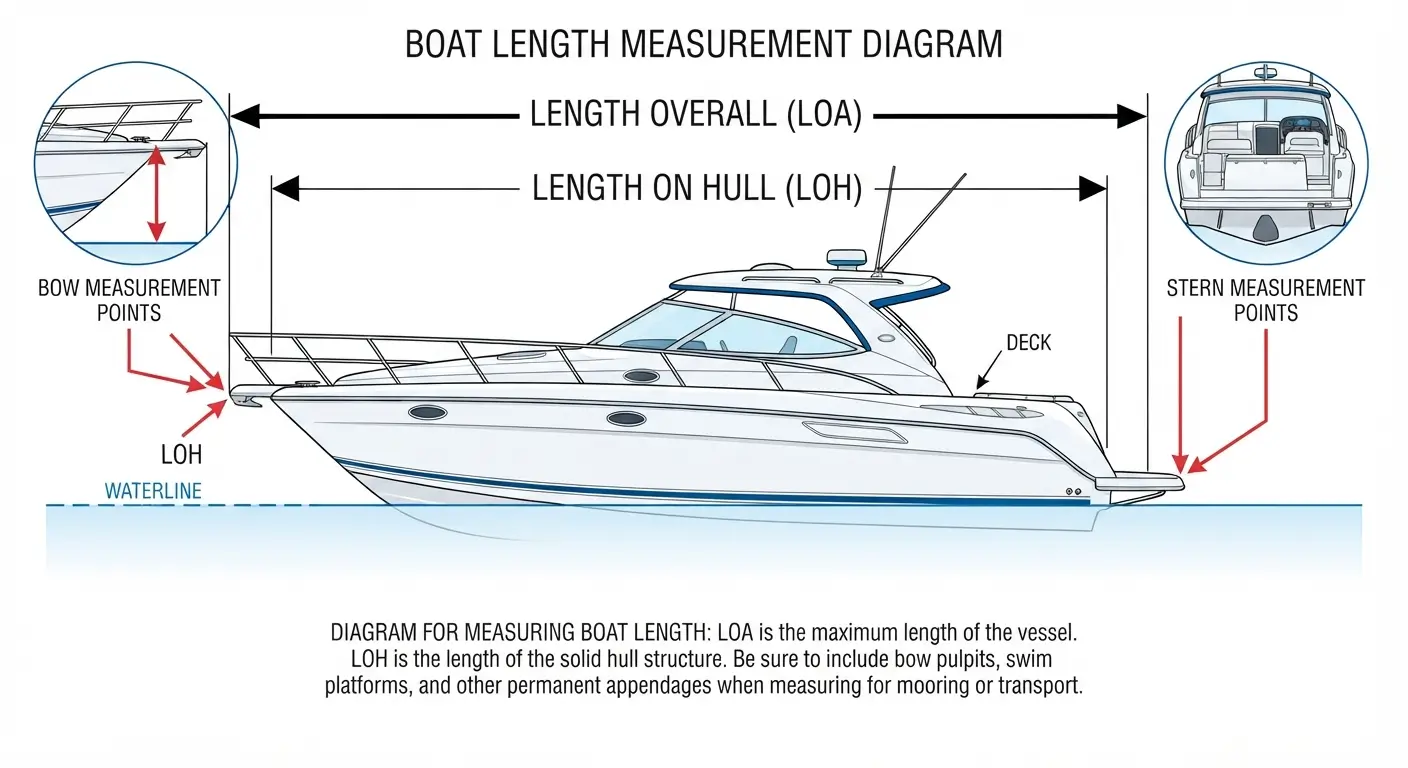
The Golden Rule: Keep It Straight
The most common mistake boat owners make is measuring over the curve of the hull, windshield, or cabin. Always measure in a straight, flat line parallel to the ground.
Pro Tip: It is much easier to measure your boat when it is out of the water on a trailer. If you are struggling to keep the tape measure straight in the air, you can mark the ground directly below the tip of the bow and the back of the stern using a plumb bob, then measure the distance between the two marks on the ground.
Centerline Length vs. Length Overall (LOA)
When buying a cover or paying for a slip, marinas and manufacturers usually ask for the Centerline Length.
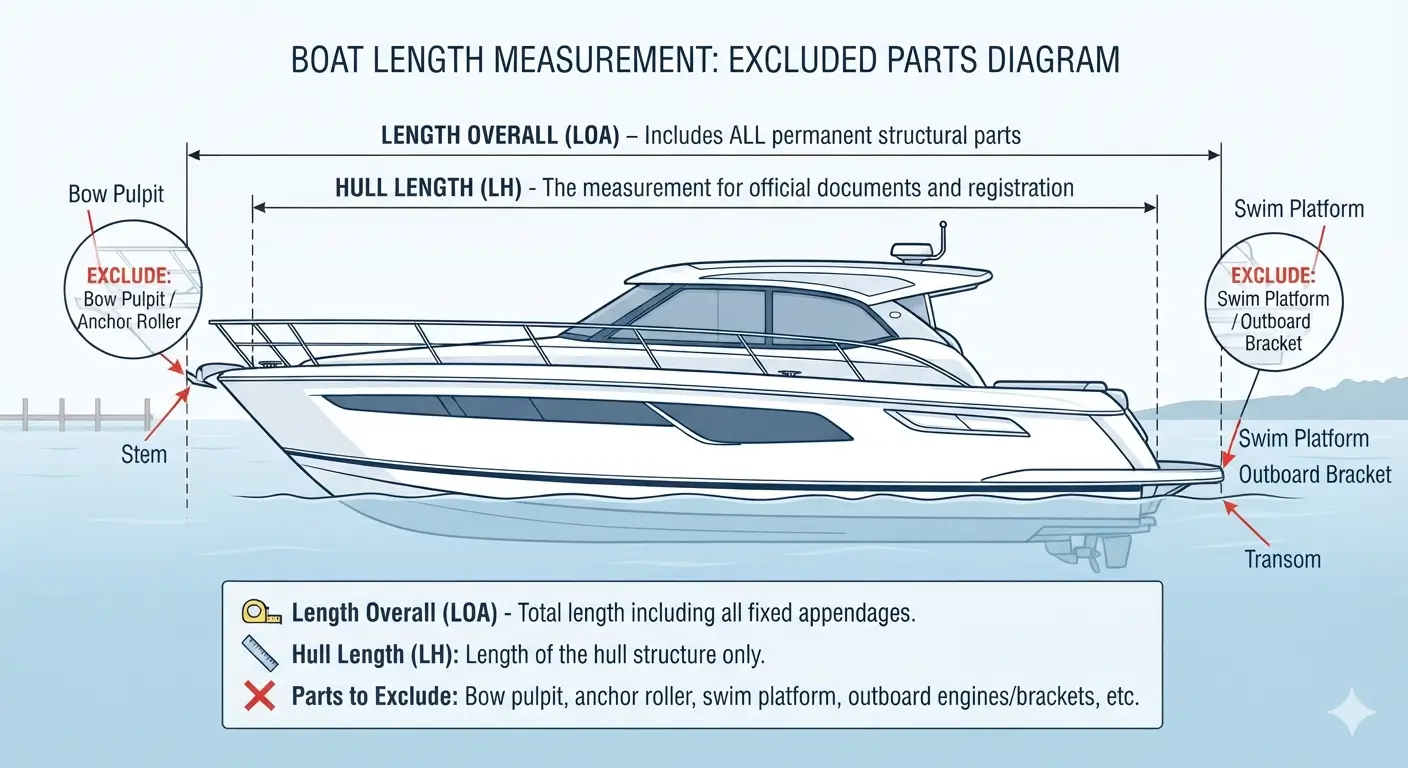
- Where to start: The foremost point of the bow.
- Where to end: The center of the stern (transom).
What to Include and Exclude
To get an accurate Centerline Length, you must know what parts of the boat technically count toward the hull length and what parts are considered "add-ons."
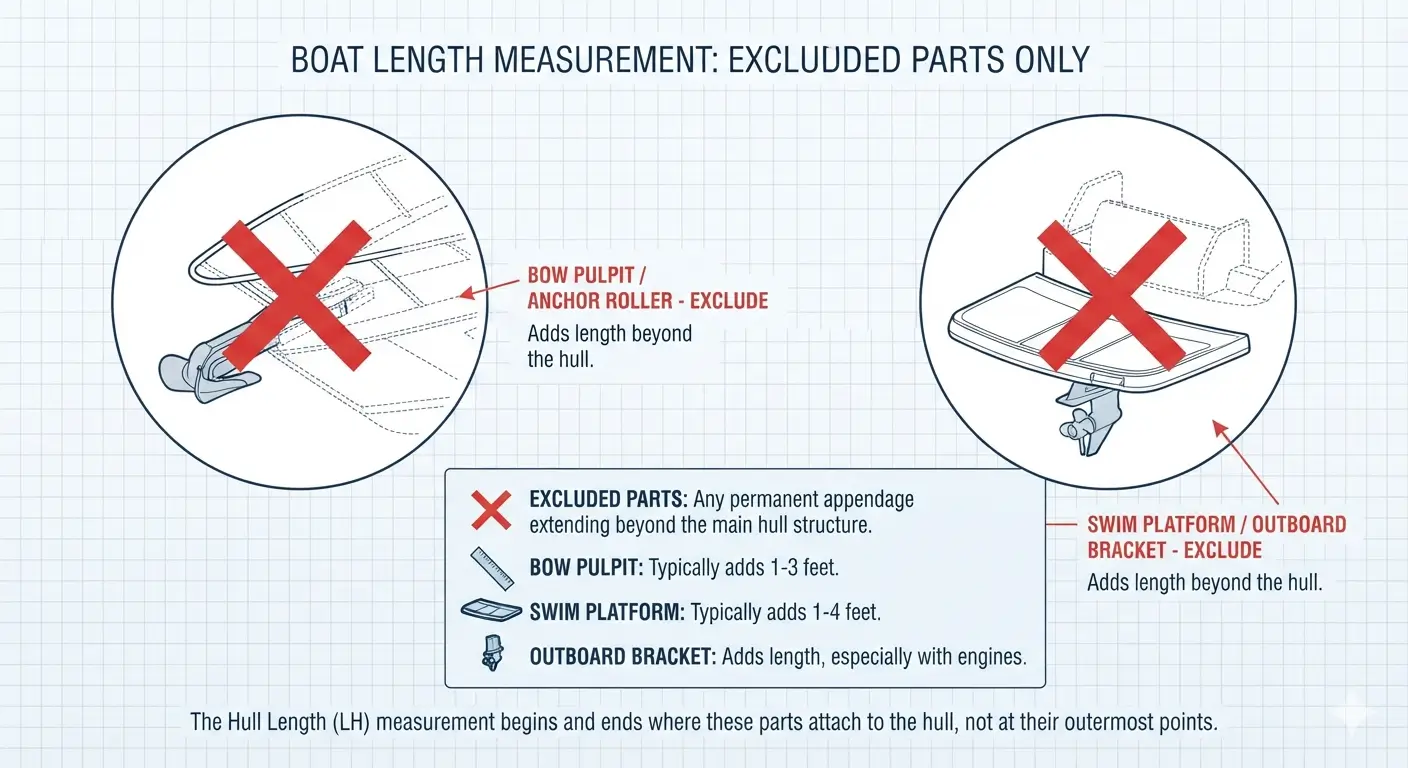
DO Include:
- The main hull.
- Molded-in swim platforms (platforms that are structurally part of the fiberglass hull).
- Molded-in bow pulpits.
DO NOT Include:
- Outboard motors or sterndrives.
- Bolt-on swim platforms (wood, fiberglass, or metal platforms bolted to the transom).
- Bow sprits and anchor rollers.
- Rudders or brackets.
- Wakeboard towers or ski pylons (these affect height, not length).