How to Measure a Boat
Whether you are ordering a custom boat cover, calculating marina slip fees, or determining winter storage requirements, knowing your boat's exact dimensions is essential. Here is a simple guide to measuring your vessel accurately.
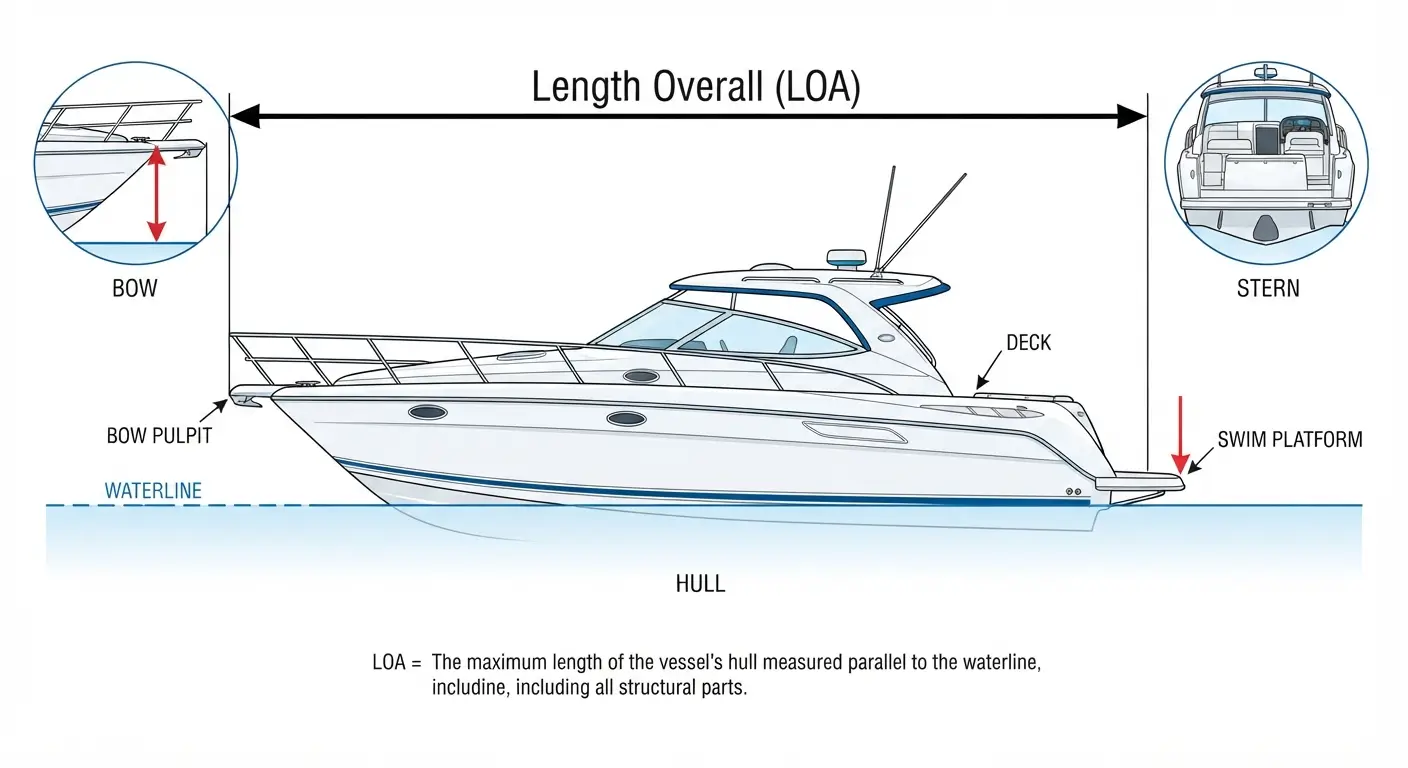
1. Centerline Length (Length Overall / LOA)
The Centerline Length is the straight-line distance from the furthest point forward (the bow) to the furthest point aft (the stern).
- What to include: The hull itself, including any molded-in swim platforms or bow pulpits.
- What to exclude: Outboard motors, bolt-on swim platforms, rudders, bow sprits, and anchor rollers.
- How to measure: Run your tape measure in a straight, flat line parallel to the ground. Do not measure up and over the curve of the deck or windshield.
2. Beam (Maximum Width)
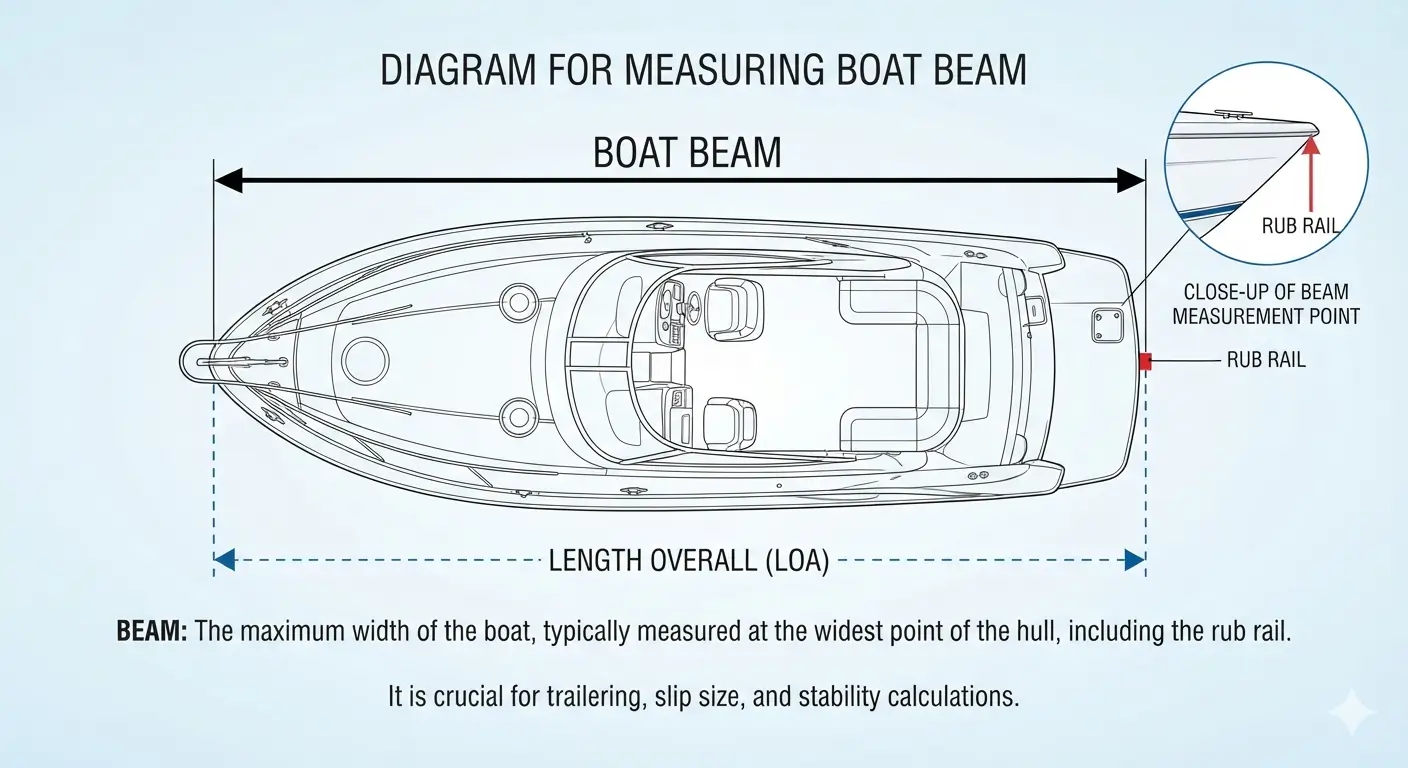
The beam is the absolute widest point of your boat. This measurement is crucial for slip size restrictions and trailering regulations on highways.
- How to measure: Locate the widest section of your boat (usually near the middle). Run a tape measure in a straight, flat line across the deck from the outside edge of the port side to the outside edge of the starboard side.
- Make sure the tape measure is pulled tight and straight, avoiding any consoles or seating that might cause the tape to arc and give a false reading.
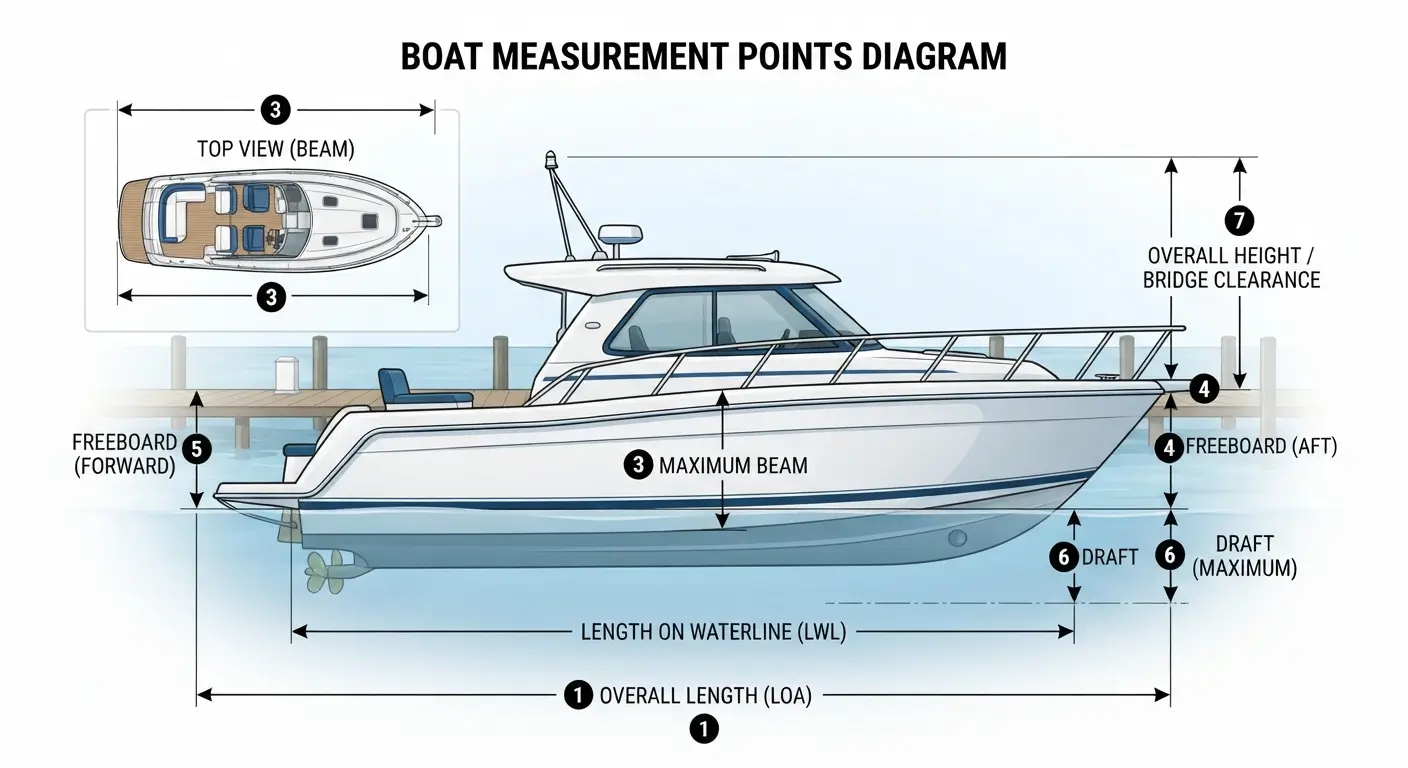
3. Draft (Depth)
The draft is the distance from the waterline to the deepest part of the boat (usually the bottom of the keel or the lowest point of the prop/drive unit). This dictates the minimum depth of water your boat needs to float.
- It is easiest to measure the draft when the boat is sitting on a trailer or dry dock.
- Measure straight down from the painted waterline mark to the lowest point of the hull or drive unit.