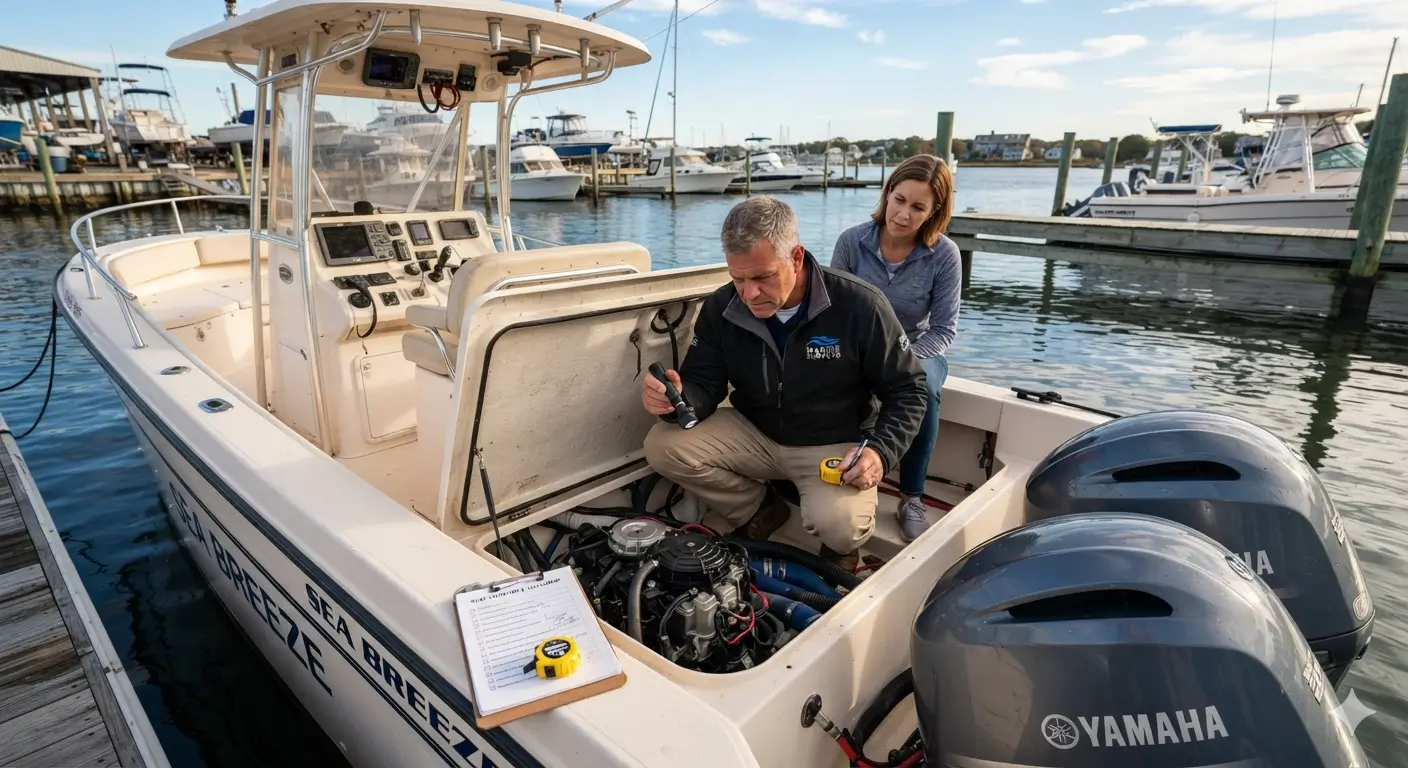
Buying or selling a used boat is a major financial decision. Unlike the automotive industry, where depreciation curves are highly standardized, the marine market is incredibly nuanced. Two identical boat models from the same year can have drastically different values based on where they were stored, how they were driven, and whether they saw saltwater.
If you are trying to figure out a fair asking price or want to ensure you aren't overpaying on the used market, here are the core factors that determine a used boat's true value.
1. The Standard Depreciation Curve
Like most vehicles, boats suffer their heaviest depreciation the moment they leave the dealership. A brand-new boat typically loses 15% to 20% of its value in the first year. Following that initial hit, the depreciation curve flattens out to a steady decline of roughly 6% to 8% per year through year ten. After a decade, the boat's baseline value stabilizes, and the condition of the hull and engines becomes the primary driver of its worth.
2. Engine Hours vs. Automotive Mileage
Boats don't have odometers; they have hour meters. The industry average for recreational boating is roughly 50 hours per year.
- High Hours: A 5-year-old boat with 600 hours has been used heavily. Buyers will expect a discount, anticipating that a costly engine repower is in the near future.
- Low Hours: While a 10-year-old boat with only 100 hours sounds like a steal, be cautious. Engines sitting idle for long periods often develop dry rot in seals, fuel phase separation, and internal corrosion.
Estimate Your Boat's Value Instantly
We've built a custom algorithm that factors in age, engine hours, saltwater usage, and overall condition to give you an accurate market estimate and depreciation breakdown.
Open the Used Boat Value Calculator →3. Freshwater vs. Saltwater Usage
The environment in which a boat lives significantly impacts its longevity. Saltwater is highly corrosive to raw-water cooling systems, lower units, electrical wiring, and upholstery. Even with meticulous flushing and maintenance, a saltwater boat will generally appraise for 10% to 15% less than an identical freshwater boat of the same age.
4. NADA / J.D. Power & BUCValu Guides
Banks and insurance companies rely heavily on guides like J.D. Power (formerly NADA) and BUCValu to establish a baseline for financing. While these guides are excellent starting points, they often struggle to account for aftermarket upgrades—such as $15,000 worth of brand-new Garmin dual-screen electronics, Rhodan trolling motors, or a brand-new custom trailer. Always factor in high-end, recent upgrades manually.
5. The "Bristol" Condition Factor
In marine terms, "Bristol" means the boat is in pristine, better-than-factory condition. If the gelcoat shines like a mirror, the bilges are completely dry and spotless, and there isn't a single tear in the vinyl, the boat will command top dollar. Conversely, faded gelcoat, soft spots in the fiberglass deck, or a moldy cabin will severely tank the asking price, as fiberglass and upholstery repairs are notoriously expensive.
Pro Tip: If you are serious about buying a boat over 25 feet or spending more than $50,000, always hire an accredited marine surveyor. A $600 survey can save you from a $20,000 mistake involving waterlogged transoms or failing engine blocks.