Understanding how much interest is on a boat loan is essential for evaluating the true cost of marine financing. Unlike mortgages which benefit from government-backed programs and historically low rates, boat loans are considered consumer or recreational loans and typically carry higher interest rates. The rate you receive will depend on a combination of personal financial factors and the characteristics of the vessel itself.
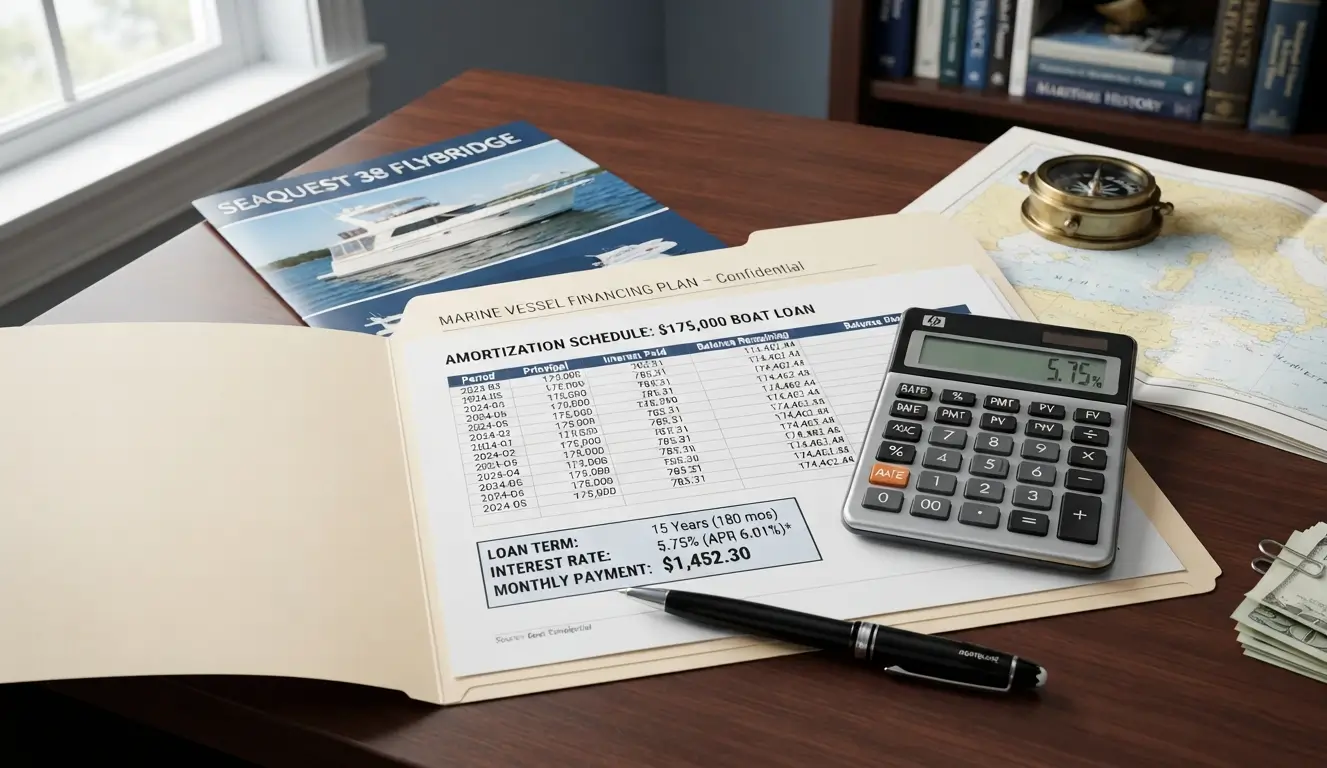
Current Boat Loan Interest Rate Ranges
Boat loan interest rates vary based on market conditions, but here are general ranges you can expect:
- Excellent Credit (740+): 5.99% – 7.99% APR
- Good Credit (700–739): 7.99% – 9.99% APR
- Fair Credit (660–699): 9.99% – 13.99% APR
- Below Average Credit (below 660): 13.99% – 18%+ APR, if approved at all
These ranges are approximate and fluctuate with broader economic conditions, Federal Reserve policy, and competition among lenders. New boats generally command lower rates than used boats, and larger loan amounts for luxury or superyacht purchases may qualify for more competitive pricing due to the higher value of the collateral.
Factors That Determine Your Interest Rate
Lenders assess several key variables when setting your boat loan interest rate:
- Credit Score: This is the single most influential factor. A higher score signals lower risk to the lender and earns you a significantly lower rate. The difference between a 700 and a 780 credit score can translate to 2–3 percentage points in rate.
- Down Payment: A larger down payment reduces the lender's risk exposure, which often results in a lower offered rate. Putting down 20% or more is generally the threshold for the best rates.
- Loan Term: Shorter loan terms (5–10 years) typically carry lower interest rates than longer terms (15–20 years), because the lender's money is at risk for a shorter period.
- New vs. Used: New boat loans almost always have lower rates than used boat loans. Used boats depreciate faster and carry more uncertainty, which lenders price into the rate.
- Boat Age and Value: Some lenders impose surcharges or rate increases for older vessels. A 15-year-old boat may carry a rate 1–2% higher than the same loan on a new model.
- Lender Type: Marine-specialized lenders, credit unions, and national banks all price differently. Credit unions often offer the most competitive rates, while dealer-arranged financing may be higher due to markup.
Fixed vs. Variable Interest Rates
Most boat loans are offered at a fixed interest rate, meaning your rate and monthly payment remain the same for the entire loan term. This provides predictability and protection against rising rates. Some lenders also offer variable or adjustable rate boat loans, where the rate is tied to a benchmark index and can change periodically. Variable rates may start lower but carry the risk of increasing significantly over time, which can make budgeting more difficult.
For most buyers, a fixed-rate loan is the safer and more predictable choice, especially on longer-term loans where rate fluctuations could have a substantial impact on total cost.

How Much Total Interest Will You Pay?
The total interest paid over the life of a boat loan can be substantial, especially on longer terms. Here is an example showing total interest on a $150,000 loan at different rates and terms:
- 6.5% for 10 years: Monthly payment of approximately $1,702. Total interest paid: roughly $54,240.
- 6.5% for 15 years: Monthly payment of approximately $1,307. Total interest paid: roughly $85,260.
- 6.5% for 20 years: Monthly payment of approximately $1,118. Total interest paid: roughly $118,320.
- 8.5% for 15 years: Monthly payment of approximately $1,478. Total interest paid: roughly $116,040.
As you can see, both a higher rate and a longer term significantly increase total interest costs. The difference between a 10-year and a 20-year term at the same rate can mean over $60,000 in additional interest on a $150,000 loan.
Tips for Securing the Lowest Interest Rate
To position yourself for the most competitive boat loan rate possible, consider these strategies:
- Strengthen Your Credit: Pay down existing debts, correct any errors on your credit report, and avoid opening new credit lines in the months before applying for a boat loan.
- Shop Multiple Lenders: Get quotes from at least three to five lenders, including marine-specific lenders, credit unions, and banks. Rate shopping within a 14-day window counts as a single credit inquiry on your report.
- Increase Your Down Payment: Putting down 20% or more demonstrates commitment and reduces the lender's risk, often resulting in a noticeably lower rate.
- Choose a Shorter Term: If you can afford higher monthly payments, a shorter term typically comes with a lower interest rate and dramatically reduces total interest paid.
- Consider a Newer Vessel: If choosing between comparable options, a newer boat may qualify for a lower rate, which could offset some of the higher purchase price.
By understanding the factors that drive boat loan interest rates and taking proactive steps to present yourself as a low-risk borrower, you can save thousands of dollars over the life of your loan and make your boating investment significantly more cost-effective.