At first glance, a large yacht and a ship might look remarkably similar — both are sizable vessels that cross oceans. However, the difference between a yacht and a ship runs far deeper than appearance. From their fundamental purpose to the regulations they follow, these two vessel categories occupy very different roles in the maritime world.
Primary Purpose
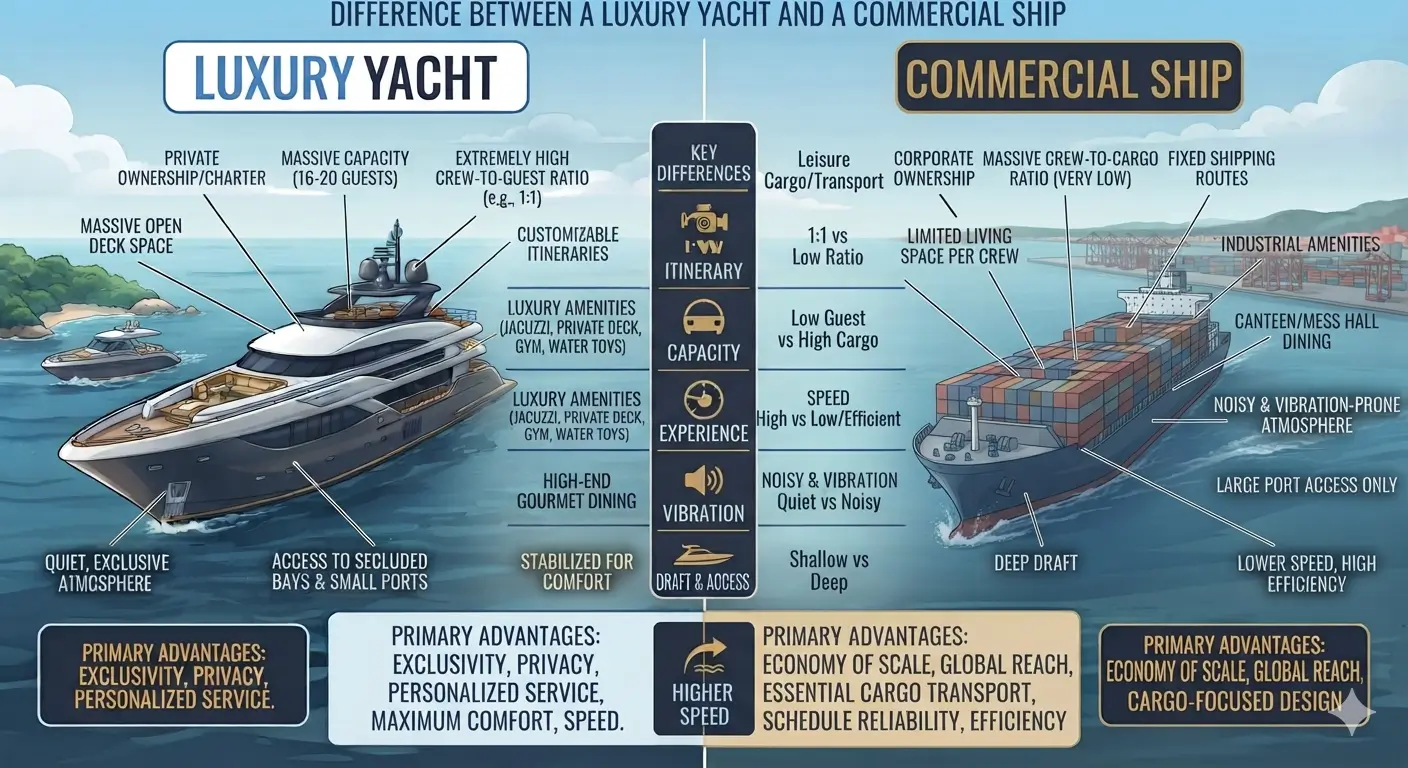
The single most defining difference is why each vessel exists. A ship is a commercial or military vessel designed to perform a job: transporting cargo, carrying passengers on scheduled routes, conducting research, or serving in a naval fleet. A yacht exists purely for private pleasure and recreation. Even the largest superyachts in the world, some exceeding 150 meters, are built to serve the leisure needs of their owner and guests — not to haul freight or operate on commercial timetables.
Size and Classification
Ships are generally the larger of the two. Container ships, oil tankers, and bulk carriers can stretch well beyond 300 meters. Yachts, while growing larger every decade, rarely exceed 180 meters. From a regulatory standpoint, maritime authorities classify vessels based on their intended use rather than length alone. A 100-meter superyacht is still classified as a pleasure craft, while a 50-meter commercial ferry is classified as a ship because it carries paying passengers on a fixed route.
Design Philosophy
Ship design prioritizes efficiency, capacity, and durability. Cargo holds, deck cranes, and reinforced hulls are standard features. Interior spaces for crew are functional but utilitarian. Yacht design is the polar opposite — every square meter is optimised for luxury, comfort, and aesthetics. Expect sweeping panoramic windows, open-plan living areas, infinity pools, helipads, and interiors finished by world-renowned designers.
Crew and Staffing
Both yachts and ships require professional crews, but the roles differ significantly:
- Ship crews are composed of merchant mariners — officers, engineers, and able seamen trained in commercial maritime operations. They follow strict watch rotations and International Maritime Organization (IMO) conventions.
- Yacht crews include hospitality-focused positions such as chefs, stewardesses, and pursers alongside nautical officers. The guest experience is the primary focus, making yacht crew culture more akin to a five-star hotel than a commercial vessel.
Regulations and Certification
Ships fall under the International Convention for the Safety of Life at Sea (SOLAS), one of the most comprehensive regulatory frameworks in existence. Yachts follow different codes depending on their size and flag state — the most common being the MCA Large Yacht Code (LY3) and the Red Ensign Group Yacht Code. While yacht regulations are rigorous, they are tailored to the unique operational profile of a private pleasure vessel rather than a commercial operation.
Revenue and Economics
Ships are income-generating assets. They earn money by moving goods or people. Yachts are the opposite — they are primarily cost centres for their owners. A superyacht can cost millions of dollars per year to operate. Some owners offset these costs by making their yacht available for charter, but even then, the yacht's primary classification remains that of a private pleasure craft.
Summary
While both yachts and ships share the open ocean, their purposes could not be more different. A ship works for a living; a yacht exists for the enjoyment of its owner. Understanding this fundamental distinction helps clarify why these vessels are built, regulated, crewed, and operated so differently — even when they happen to be similar in size.