The terms "yacht" and "boat" are often used interchangeably in casual conversation, but in the maritime world they refer to distinctly different types of vessels. Understanding the difference between a yacht and a boat comes down to size, purpose, amenities, and cost. Whether you are a first-time buyer or simply curious, this guide breaks down the key distinctions.
Size and Length
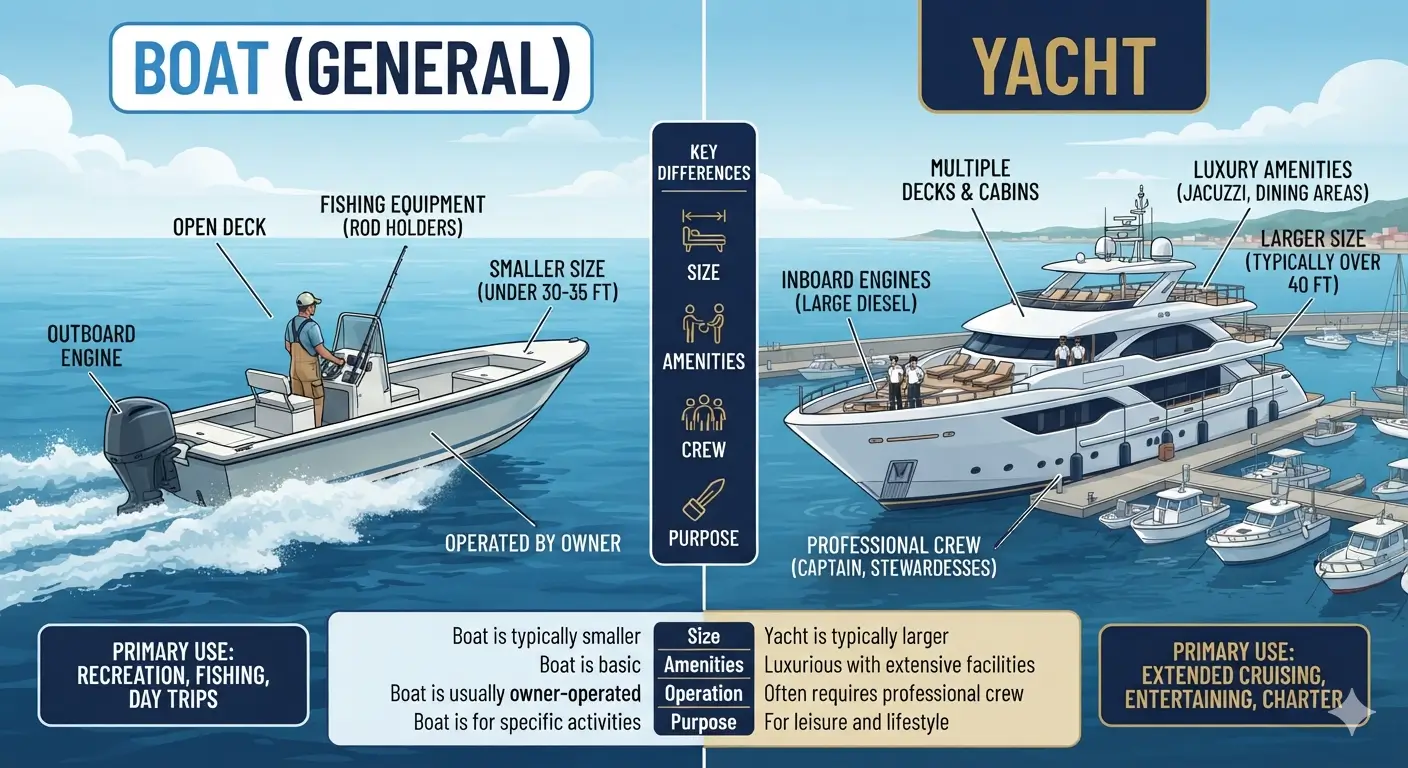
The most obvious difference is size. A boat is a broad, catch-all term for virtually any watercraft, from a modest 10-foot dinghy to a 30-foot fishing vessel. A yacht, on the other hand, generally starts at around 33 feet (10 meters) in length. Vessels exceeding 80 feet (24 meters) are typically classified as superyachts, but even at the smaller end of the spectrum, yachts are substantially larger than what most people picture when they hear the word "boat."
Purpose and Use
Boats serve an enormous range of functions. They can be used for fishing, water sports, short coastal trips, or simple transportation. Their design is usually optimised for a specific practical task. Yachts, by contrast, are purpose-built for leisure and recreation. They are designed to provide comfort over extended voyages and often feature overnight accommodation, entertainment systems, and full galley kitchens.
Luxury and Amenities
This is where the gap really widens. A standard boat may have basic seating, a cooler, and perhaps a small cabin. A yacht is an entirely different experience:
- Multiple staterooms with en-suite bathrooms
- Full-size kitchens (galleys) with professional appliances
- Formal dining areas and spacious salons
- Sun decks, jacuzzis, and swim platforms
- Advanced navigation and communication systems
The interior fit-out of a yacht frequently features premium materials such as teak, marble, and custom leather upholstery — details rarely found on a standard boat.
Crew and Operation
Most boats are owner-operated. You take a boating safety course, get your licence, and head out on the water yourself. Yachts, especially those over 60 feet, usually require a professional crew. This can range from a single captain to a full team that includes deckhands, a chef, stewardesses, and engineers. The operational complexity and regulatory requirements increase significantly with vessel size.
Cost of Ownership
A new recreational boat can cost anywhere from a few thousand dollars to a couple of hundred thousand. Yachts operate in a completely different financial bracket. Entry-level yachts start in the low hundreds of thousands, while superyachts can cost tens or even hundreds of millions of dollars. Annual running costs — including crew salaries, insurance, berthing fees, maintenance, and fuel — typically amount to 10 percent of the yacht's purchase price per year.
The Bottom Line
In simple terms, every yacht is technically a boat, but not every boat is a yacht. A yacht distinguishes itself through its larger size, luxury-focused design, professional crew requirements, and significantly higher cost. If you are exploring the world of yachting for the first time, understanding these differences is the essential first step toward making informed decisions — whether you are buying, chartering, or simply appreciating these remarkable vessels from the shore.