Boat Repower Calculator
REF: EN-850-MARINE
Use this tool to estimate the total cost of repowering your boat and calculate your potential return on investment (ROI) through fuel savings. Compare your current engine's fuel burn against a modern replacement to see exactly how long it will take for the new engine to pay for itself.
Estimated Repower Cost Breakdown
The biggest surprise for most boat owners is discovering that the price of the engine itself is only a portion of the total repower project cost. Understanding the full financial picture is crucial before committing to an upgrade.
Engine Cost vs. Rigging Fees
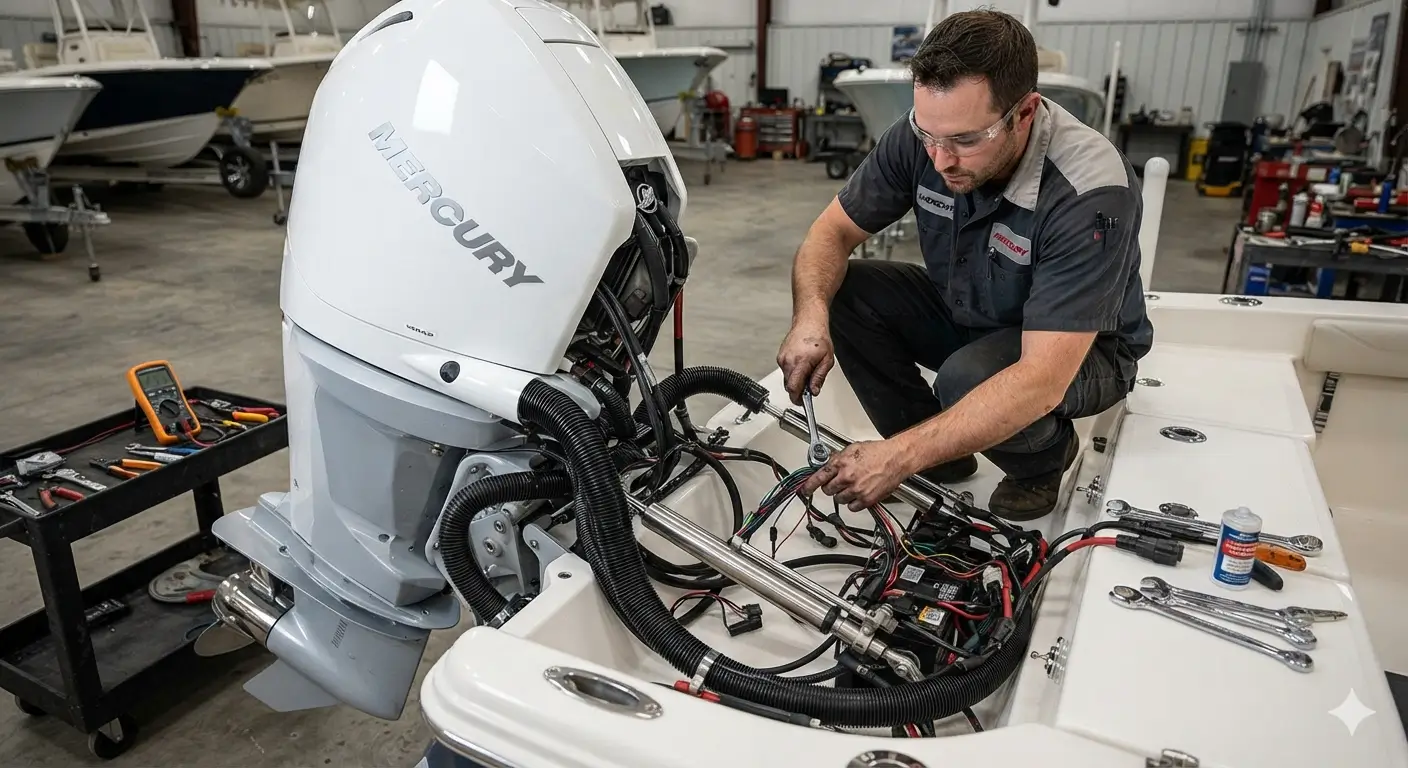
While the motor is the largest line item, professional labor, rigging, and peripherals generally make up 25% to 45% of the total cost. For example, a new 150hp outboard might cost $15,000, but expect to pay several thousand more for professional installation, engine alignment, and water testing.
A "budget" approach that only replaces the engine can lead to expensive failures down the line if outdated peripheral components, like old fuel hoses or corroded shafts, fail under the strain of the new power plant.
Hidden Costs: Props, Steering, Gauges
When moving from an older motor to a modern one, your existing setup will likely require significant upgrades. These hidden costs can quickly add up:
- Controls and Gauges: Upgrading from mechanical to digital shifting provides a smoother ride but requires expensive compatible controls and digital dash displays.
- Steering Systems: A heavier, more powerful engine often necessitates an upgrade to hydraulic or digital electric steering.
- Stern Gear: For inboards, the propeller shaft, strut, and rudder may need refurbishment or replacement to match the new engine's torque.
- Fuel System Updates: Old fuel lines and tanks may not handle the flow rates of modern engines or the chemical makeup of modern fuels.
Repower ROI: How Much Will You Save on Fuel?
Upgrading a worn-out engine will undoubtedly save you money at the fuel dock, but calculating the return on investment requires looking at how often you run your boat and at what speeds.
2-Stroke vs 4-Stroke Efficiency
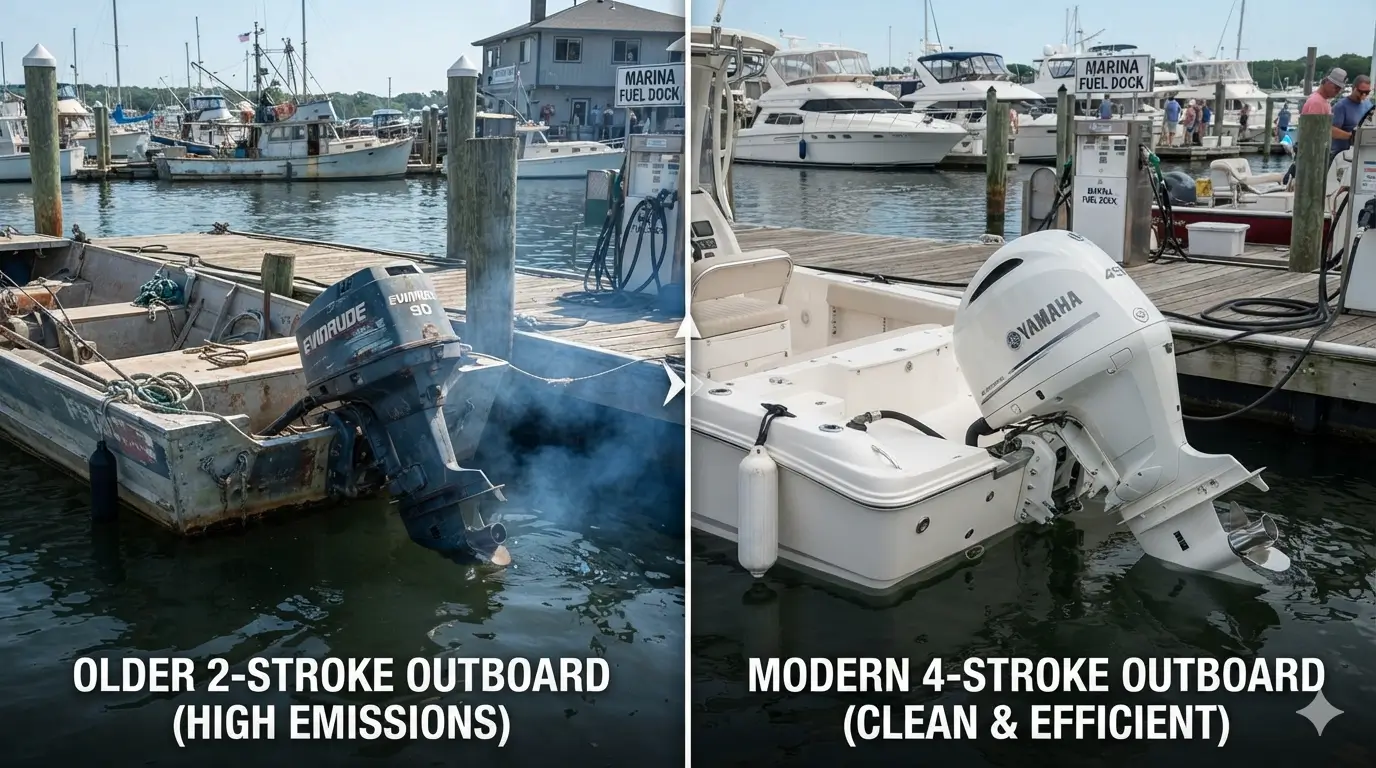
If you are replacing an older carbureted two-stroke engine, you will see a massive improvement in fuel economy—often reducing fuel burn by nearly half—regardless of what modern engine you choose.
When comparing modern Direct Injection (DI) two-strokes to modern four-strokes, the fuel economy is largely comparable. However, four-strokes excel in the mid-range (between 2,500 and 5,000 RPM)—the cruising sweet spot where most boats spend their time. A four-stroke's complete combustion cycle ensures fuel is burned more efficiently, leading to better economy and fewer emissions over long days on the water.
Calculating the Payback Period
Does the fuel savings justify the cost of the repower? For the casual recreational boater, the answer is often no—the upfront cost of the motor will outweigh the fuel savings over the life of the engine. However, if you are a commercial operator or a high-hour recreational user, the fuel efficiency of a modern four-stroke can result in thousands of dollars in annual savings, creating a realistic payback period.
Is Your Boat Hull Worth Repowering?
Not every boat is a good candidate for a repower. The viability of the project comes down to the structural integrity of your current hull and how it will react to modern propulsion.
Structural Evaluation
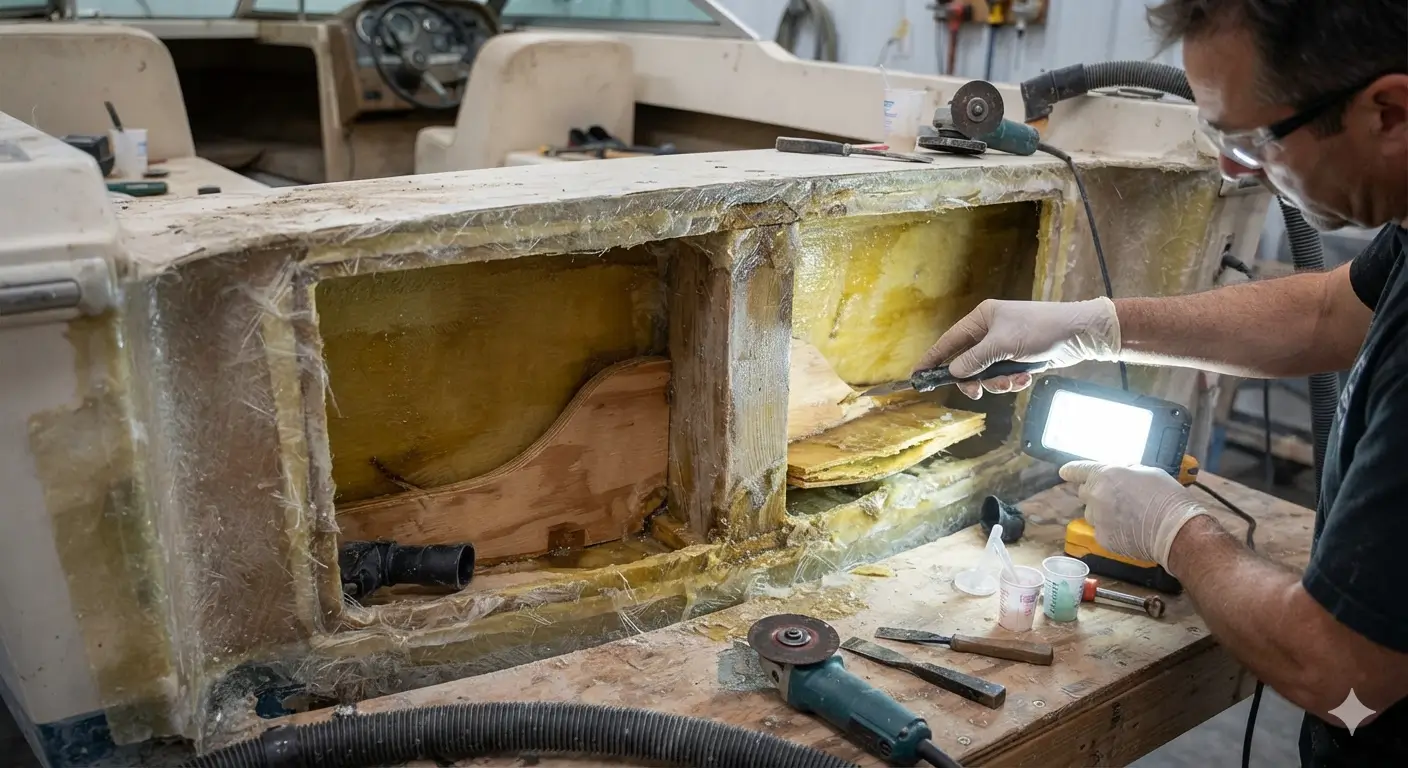
Before spending tens of thousands of dollars on a new motor, you must ensure the "bones" of your boat are solid. The transom, stringers, and overall hull structure must be inspected for rot, water intrusion, or delamination. A clean, sound hull will cost less to repower, whereas an older boat requiring structural reinforcement or transom repair will significantly inflate the project budget.
Weight and Balance Considerations
Modern four-stroke outboards are generally heavier than the older two-stroke models they often replace. Bolting a heavier engine onto an older hull can alter the boat's center of gravity, causing the stern to sit too low in the water. This can compromise scupper height (allowing water onto the deck) and affect planing performance. Your marine mechanic must calculate the weight differential to ensure the hull can safely support the new setup.
Repower vs. Buying a New Boat
If your current hull is in great shape, meets your needs, and you plan to keep it for at least five more years, repowering is usually the smarter financial decision. Repowering allows you to benefit from improved performance, reliability, and advanced technology without the massive depreciation hit and high purchase price of a brand-new vessel.
However, if your boat has structural issues, requires extensive repairs beyond the engine, or simply no longer fits your boating lifestyle, buying new may be the better route. When you sell a used boat, buyers focus heavily on the age of the hull rather than the age of the new motors, making it hard to recoup a repower investment if you sell quickly.
How to Choose the Right Engine
The type of engine you choose dictates how your boat handles, the ease of maintenance, and how you use the vessel.
Propulsion Types
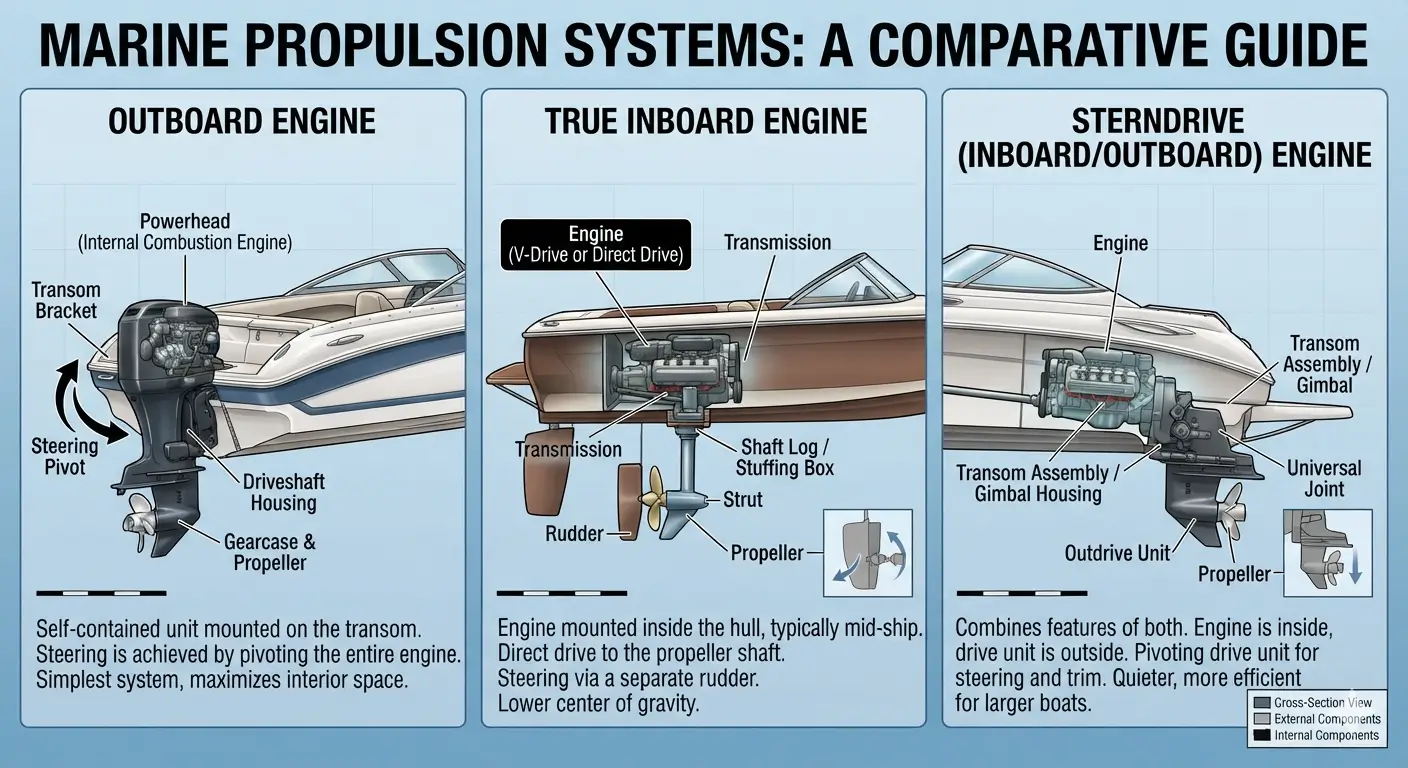
- Outboard Engines: Mounted on the transom, outboards free up interior space, are easy to access for maintenance, and can be tilted completely out of the water. They are the most popular choice for smaller cruisers, fishing boats, and recreational vessels.
- Inboard Engines: Mounted inside the hull with a shaft extending through the bottom, inboards offer superior balance, stability, and a quiet ride. They produce incredible torque, making them the traditional choice for serious tow sports, but they take up interior space and limit maneuverability at low speeds.
- Sterndrive (I/O) Engines: A hybrid approach, sterndrives feature the engine inside the hull but mount the drive unit (propeller and gearbox) on the transom. They offer the clean aesthetic of an inboard with the trimmable drive and maneuverability of an outboard, but they come with increased maintenance complexity.
Horsepower Optimization
If your old engine's horsepower was below the boat manufacturer's maximum rating, upgrading to higher horsepower can transform the boat's performance. More power not only increases top-end speed but allows you to cruise at lower RPMs, improving fuel economy and reducing wear on the engine. Always consult your boat's capacity plate—exceeding the maximum horsepower rating is dangerous and illegal.
Frequently Asked Questions (FAQ)
How much does it cost to repower a boat?
The total cost of a boat repower depends on the engine type, horsepower, and how much peripheral equipment needs upgrading. For a single outboard in the 150–300 hp range, expect to pay between $15,000 and $35,000 including the motor, rigging, controls, and professional installation. Twin engine setups or large inboard/sterndrive conversions can easily exceed $50,000–$80,000. Always budget an additional 25–45% on top of the bare engine price for labor and ancillary parts.
Is it worth repowering an old boat?
It depends on the hull condition and your intended use. If the hull, transom, and stringers are structurally sound, repowering is almost always cheaper than buying a comparable new boat. A repower gives you modern fuel efficiency, reliability, and warranty coverage on a hull you already know and love. However, if the boat needs major structural work on top of the engine, the combined cost may approach or exceed the price of a newer vessel.
How long does a boat repower take?
A straightforward outboard-to-outboard swap with the same brand and similar horsepower can be completed in 1–3 days by an experienced marine mechanic. More complex jobs—such as switching from a two-stroke to a four-stroke, upgrading controls to digital, or converting from sterndrive to outboard—can take 1–3 weeks depending on parts availability and the extent of the rigging work required.
Can I put a bigger engine on my boat?
You can increase horsepower up to the maximum rating on your boat's capacity plate (required by the USCG on boats under 20 feet). Exceeding this rating is dangerous and illegal. If your current engine is well below the maximum, upgrading to a higher-horsepower motor can dramatically improve performance, hole shot, and cruising economy. Just ensure the transom and steering system can handle the additional weight and torque of the larger motor.
Should I repower with a 2-stroke or 4-stroke outboard?
Modern direct-injection two-strokes and four-strokes are both excellent choices with comparable fuel economy. Four-strokes tend to be quieter, produce fewer emissions, and excel in fuel efficiency at cruising RPMs. Modern DI two-strokes are typically lighter, deliver faster acceleration, and have fewer moving parts for simpler maintenance. Your choice should depend on how you use your boat—four-strokes suit long-range cruisers, while two-strokes are popular with performance-oriented anglers.
Does repowering increase a boat's resale value?
A fresh repower will increase your boat's market appeal and value, but you are unlikely to recoup 100% of the repower cost on resale. Buyers weigh the hull age heavily—a 25-year-old hull with a brand-new motor is still a 25-year-old hull. That said, low-hour modern engines with transferable warranties are a strong selling point and can make the difference between a boat that sits on the market and one that sells quickly.
What hidden costs should I expect during a repower?
Beyond the engine itself, common additional costs include: new control cables and throttle/shift assemblies (especially when switching to digital controls), steering system upgrades (hydraulic or power-assisted), a new propeller matched to the replacement engine, fuel line and filter replacements, updated wiring harnesses, and new gauges or a digital helm display. Budget an extra $2,000–$8,000 depending on the scope of these upgrades.
How do I calculate fuel savings after a repower?
Subtract the new engine's fuel burn rate (gallons or liters per hour) from the old engine's rate. Multiply the difference by your local fuel price and your estimated annual engine hours. For example, if your old engine burns 12 GPH, the new one burns 7 GPH, fuel costs $5.50/gal, and you run 200 hours per year: (12 − 7) × $5.50 × 200 = $5,500 annual savings. Use the calculator above to run your own numbers instantly.